2 films available · 6 in development
Repair, Recovery & Tissue Health
An eight-part collection following repair research from experiments to defined clinical applications. Start with BPC-157, then explore the original sources. The sequence organizes evidence questions, not treatment rankings.
Watch the collection
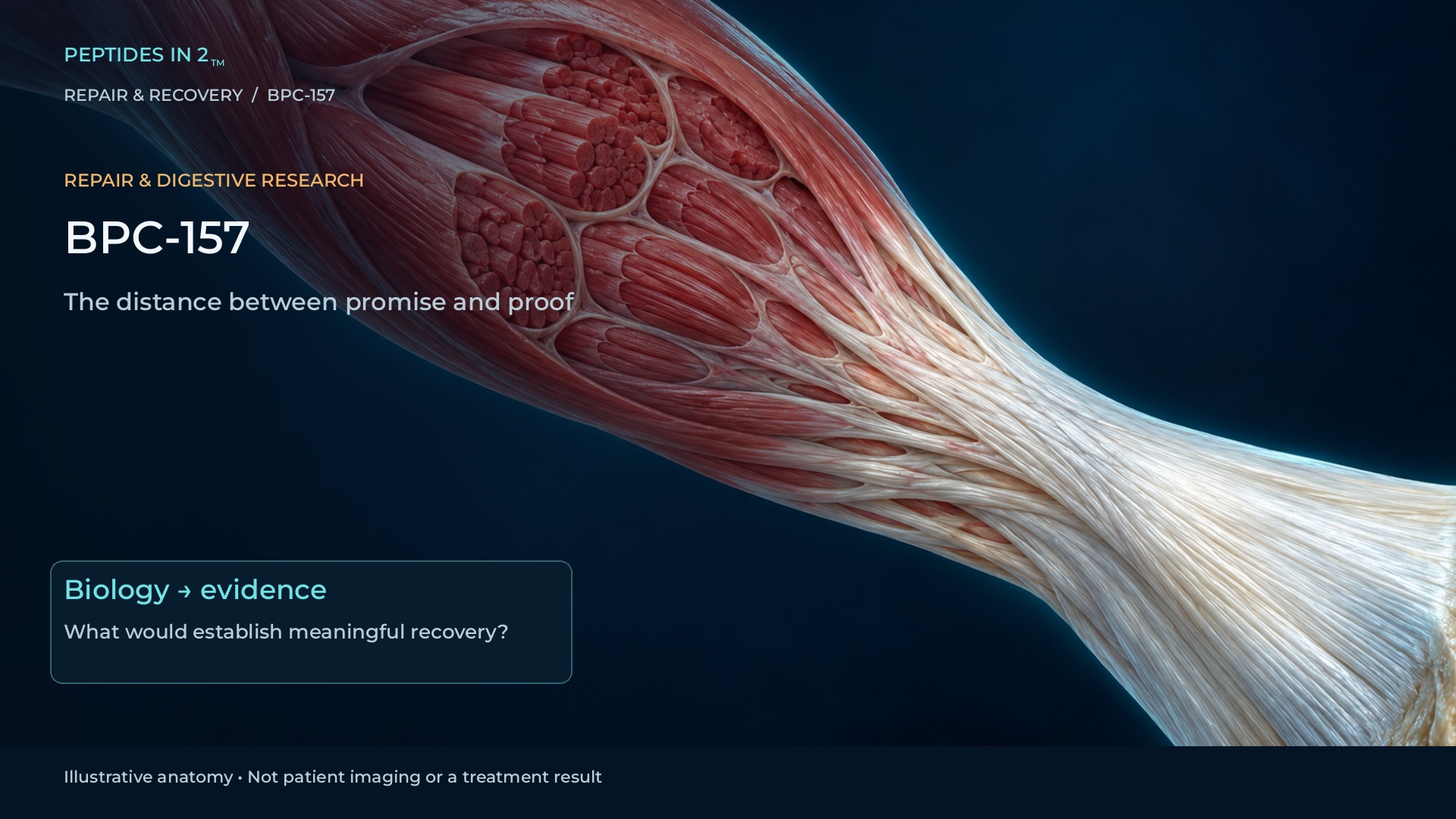
01 · Available · 2:12 · English
BPC-157: repair and digestive research
Tissue recovery, gastric research, and the distance between encouraging findings and established human benefit.
Watch the film, transcript & references →
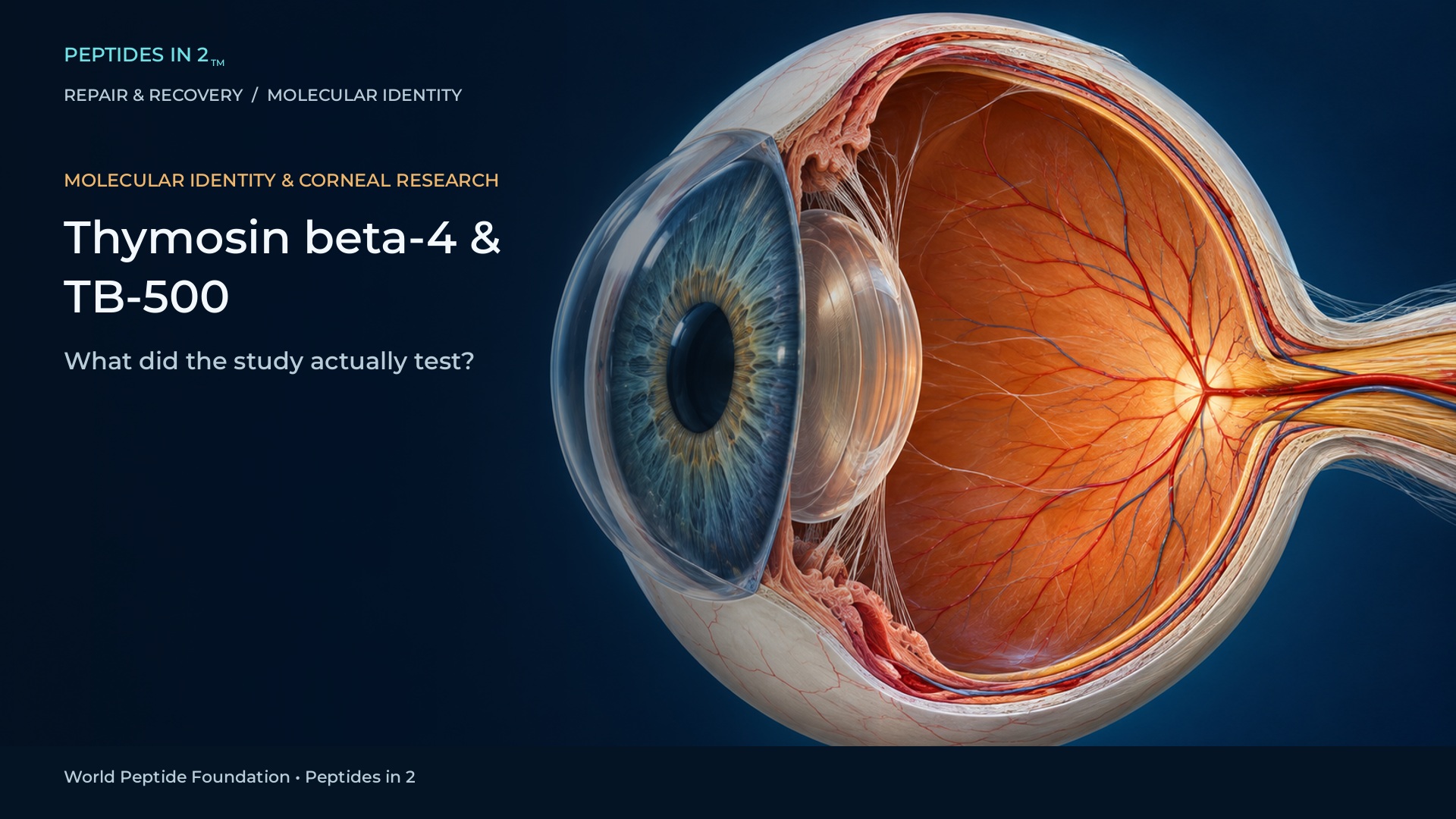
02 · Available · 2:03 · English
Thymosin beta-4 & TB-500: identify the molecule
Molecular identity, corneal research, and matching a claim to the preparation actually tested.
Watch the film, transcript & references →
The remaining six topics
GHK-Cu is next in development. The links below open available research, not finished videos. Becaplermin and cenegermin are growth-factor proteins within the wider peptide/protein signaling landscape.
03 · Next · In development
GHK-Cu
How does a cellular finding become evidence of a clinical benefit?
Explore available research →04 · Planned
Becaplermin / PDGF-BB
What does a defined wound-closure result establish?
Explore available research →05 · Planned
Cibinetide / ARA-290
How do nerve-fiber measurements relate to symptoms and function?
Explore available research →06 · Planned
Cenegermin / NGF
How is a repair signal evaluated for a particular corneal disease?
Explore available research →07 · Planned
Teriparatide / PTH(1–34)
How do bone measurements differ from fracture outcomes?
Explore available research →08 · Planned
Teduglutide / GLP-2
What changes in intestinal function were actually measured?
Explore available research →
Experimental research, an approved product in a defined setting, and a broad recovery claim provide different kinds of information. Each published film identifies the studied preparation, outcomes, limitations, and applicable regulatory context.